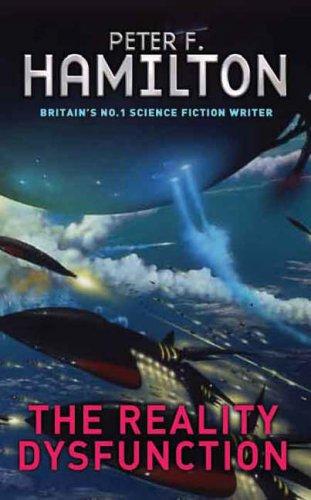
This is a book you buy for a long flight the way people used to buy a doorstop paperback specifically because it was thick, and at over a thousand pages split into two volumes for the American edition, it delivers on that front if nothing else. The scope is genuinely wild, a six hundred year future where a bitek habitat harvests helium-3 from gas giants while somewhere else on the timeline the actual dead start coming back through possessed bodies, and Hamilton commits to both halves of that tonal whiplash without blinking.
The affinity bonding concept, this telepathic-adjacent link some characters share with living ships and with each other, is the piece of world-building I keep thinking about longest after finishing. It’s handled with more restraint than most of the rest of the book, which tends toward everything turned up as far as it’ll go, sex and violence and scale all pushed past where a tighter edit would have stopped.
I won’t pretend the first hundred-plus pages aren’t a real slog, multiple parallel storylines that don’t obviously connect yet, and I understand completely why some readers put it down there and never picked it back up. It rewards patience more than it rewards enthusiasm, honestly, this reads like science fiction for people who’ve already read a lot of science fiction and want the training wheels off entirely.
There’s content here worth a real warning too, graphic sexual violence that goes further and stays longer than the plot strictly requires, and I don’t think that’s a small note to leave out of a review. I finished it, and I’m glad the concept exists in my head now, the scale of it is legitimately impressive, but I’d hand this to a specific kind of reader rather than a general one. Three stars for ambition that mostly earns itself and a length that occasionally works against it.