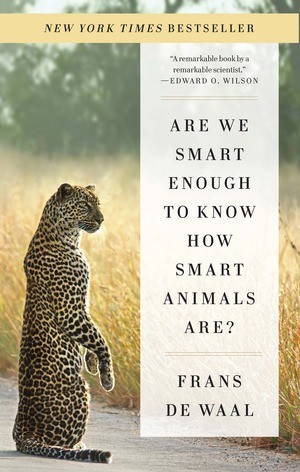
This isn’t fiction and I don’t review a lot of nonfiction here, but it kept coming up in enough conversations that I finally picked it up, and I’m glad I did even with some real reservations about the writing itself. De Waal’s whole project is dismantling the assumption that human cognition is the only kind worth measuring against, and the concept he leans on hardest, Umwelt, a species’ own specific sensory and cognitive world, is the idea I keep bringing up unprompted at dinner since finishing it. Judging an elephant’s intelligence by a test built for a chimp’s body and senses tells you almost nothing except that you built the wrong test.
The chapter structure moves through specific case studies, corvids caching food and apparently planning for future hunger, elephants passing mirror self-recognition tests, and each one lands better than the connective tissue between them does. De Waal names a specific bias he calls anthropodenial, refusing to see continuity between human and animal minds even when the evidence is staring at you, and it’s a genuinely useful term I hadn’t had before.
Here’s my real complaint though, and enough other people have made it that I don’t think it’s just me: this book repeats itself. The point about scientists once being professionally forbidden from naming the animals they studied, treating a name as evidence of unscientific attachment, gets made more than once in ways that feel like padding rather than reinforcement. A tighter edit would have helped a book whose actual ideas are strong enough not to need repeating.
Worth reading if you have any curiosity about where the line between instinct and thought actually sits, and I don’t think the line is where most of us assume it is anymore having read this. Four stars, docked one for a writer who clearly had more discipline in the lab than on the page.