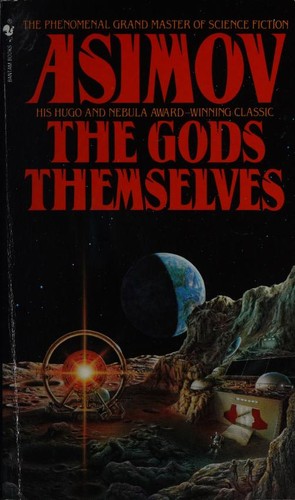
Three parts, three completely different modes of storytelling, and the middle one is the reason this book has stuck with me. Asimov spends the first act on humans discovering the Electron Pump, a way of trading matter with a parallel universe for what looks like free, unlimited energy, and it reads exactly like the science-teacher-explaining-things voice Asimov always writes in, compelling in a slightly wooden way that I’ve come to just accept as his register.
Then the middle section drops you entirely into the parallel universe, told from the alien beings living there, soft ones and hard ones and a rational one, with a completely different physics and a completely different social and reproductive structure, and it’s genuinely strange and inventive in a way the human sections don’t attempt to be. I predicted the eventual plot connection between the two universes fairly early, but the alien society itself, not the mystery around it, is what kept me reading that section slower than I needed to.
I have to flag the gender stuff honestly, because it dates the book more than the science does. The human woman in the third section is written with the kind of casual condescension you’d expect from 1972, smart but always measured against and slightly beneath the men around her, and it’s the one place the book feels genuinely of its era rather than ahead of it the way the physics does.
Worth it for that middle third alone, which I’d almost recommend reading as a stand-alone novella if you could get away with it. The bookends are solid hard sci-fi doing exactly what Asimov built his career doing, competent and a little dry. Four stars, the alien section alone earning most of them.